
By Ahmad Ali Chughtai, Leading Clinical Psychologist Specialist in Pakistan
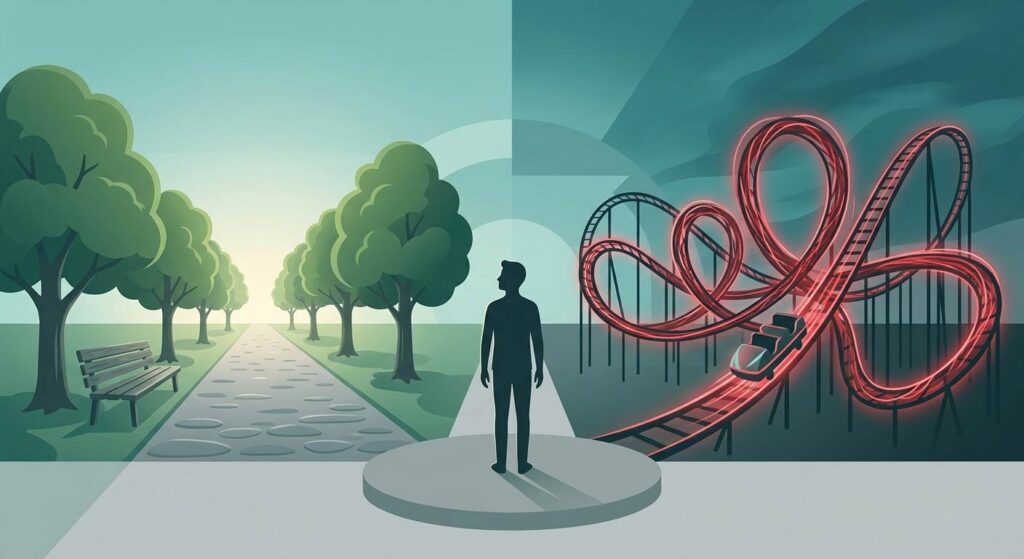
Is it true affection, or is it a destructive obsession? In our modern, high-stress environment, many people find themselves trapped in “high-intensity” relationships that feel like a roller coaster. Often, individuals searching for a therapist in Lahore or psychotherapy near me come to realize that what they once labeled as “passionate love” is actually a clinical condition known as Love Addiction. Understanding the nuances of mental health psychology is the first step toward reclaiming your peace of mind and emotional independence.
The Core Difference: Security vs. Anxiety
According to Ali Chughtai and other experts in the field, the fundamental distinction between healthy love and addiction lies in the baseline emotional state of the partners. In a healthy dynamic, the baseline is security. You don’t wake up wondering if your partner still loves you; you simply know it. You don’t feel the urge to check their phone or monitor their location because there is a foundation of trust.
Conversely, Love Addiction is fueled by an “anxiety-driven” cycle. It often involves a constant need to “prove” the relationship’s existence. If you find yourself needing to send 100 texts a day or feeling a physical pang of panic if a reply is delayed, you are operating out of addiction rather than affection. This state often leads people to seek a clinical psychologist to help manage the overwhelming feelings of dread that accompany a partner’s perceived withdrawal.
The Neurobiology of Obsession
It is important to understand that love addiction isn’t just a “personality flaw”—it is biological. A cognitive psychologist will tell you that toxic relationships affect the brain’s dopamine reward system in a manner nearly identical to gambling or substance abuse. The “high” of a reconciliation triggers a massive release of neurochemicals, making the eventual “withdrawal” physically painful. Professional cognitive treatment is often required to reset these neural pathways.
Common Patterns of Toxic Attachment
In the clinical setting of couples therapy Lahore, we frequently observe three recurring patterns that signal a move away from healthy attachment towards something more harmful:
1. The Obsessive-Compulsive Partner
This pattern involves a total loss of self. The individual becomes so focused on the partner’s needs, moods, and schedule that they neglect their own career, health, and social life. Breaking this cycle requires intensive mindfulness training to help the individual remain grounded in their own reality.
2. The “Fixer” or The Rescuer
This is perhaps the most common scenario found by a lahore therapist. The Fixer remains in a relationship with someone who is critical, dismissive, or even abusive, under the false hope that their love will heal the other person. This cycle often continues until the individual reaches a state of clinical burnout or major depressive disorder.
3. The Avoidant-Anxious Dance (Love Bombing)
This pattern starts with “Love Bombing”—an overwhelming display of affection that creates an instant, artificial bond. However, the moment intimacy becomes real, the avoidant partner withdraws. This “push-and-pull” strategy is a primary focus during cbt therapy sessions.
The Path to Recovery: Seeking Professional Help
Recovery from love addiction is a journey of returning to the self. While some may look for free therapy options, investing in a structured program with a clinical psychologist in Lahore is often the most effective route. The recovery process generally focuses on three pillars:
- Grief Work: Learning that the end of a toxic relationship, while painful, is “good grief”—the necessary door to a healthier life.
- Cognitive Reframing: Using CBT in Lahore to identify and challenge the irrational beliefs that keep you tethered to a partner who doesn’t respect you.
- Emotional Regulation: Utilizing mindfulness therapy and dialectical behavior therapy (DBT) to manage intense “cravings.”
Regain Your Emotional Freedom
If you recognize yourself in these patterns, you don’t have to suffer alone. Whether you need a male psychologist in Lahore or specialized cognitive treatment, help is available. Take the first step toward a healthier version of نفسیات (Psychology) today.
Watch and Learn: Why You Can’t Let Go
For a deeper dive into the science of attachment and how to heal from love addiction, watch this comprehensive explanation by Clinical Psychologist Ahmad Ali Chughtai.
Visit our YouTube channel for more mental health insights.
Frequently Asked Questions
Q: What is the difference between a psychologist and a psychiatrist?
If you are debating which is best psychologist or psychiatrist, a clinical psychiatrist prescribes psychologist medicine for severe anxiety, while a psychologist focuses on talk therapy like cbt or dbt therapy near me
Q: How can I find a reputable psychologist in Lahore?
When searching for a psychologist’s office, look for clinical credentials and experience in mental health psychology. Institutions like Chughtai Healthcare offer access to qualified specialists in Pakistan.
Q: Is Love Addiction actually treatable?
Absolutely. Through cbt therapy sessions and mindfulness coaching, individuals learn to build self-worth that isn’t dependent on another person’s validation. Cognitive behavior therapy provides the necessary tools for change.
Q: Are there clinics that handle intimacy-related psychological issues?
Yes, a sexual health clinic or a specialized sex clinic often has psychologists on staff to handle the intersection of physical intimacy and psychological obsession.
